
Training & Capacity Building
The summer school, organized in July 2023 on the theme of health ecology, offered intensive, interdisciplinary training. It brought together students, researchers, and local stakeholders to develop practical and theoretical skills regarding wildlife sustainability and its associated socio-health challenges.
SHUNT also participates in the OHARIS Master’s program at the University of Abomey-Calavi, which focuses on the "One Health" approach, promoting an integrated vision of the interactions between human, animal, and environmental health.
Finally, SHUNT aims to develop awareness-raising tools tailored to local realities. This will enable the effective dissemination of knowledge and strengthen ownership of sustainability, biosecurity, and conservation issues among both communities and policymakers, ensuring a concrete impact beyond the academic sphere.
PhD students
Adounke Gilles
Adounké Gilles
Université d'Abomey Calavi
Bénin
Centre de Recherche sur la Biodiversité et l'Environnement (CRBE)
Université de Toulouse
France
Research topic
My PhD research focuses on the sustainability of hunting in the Lama Classified Forest in Southern Benin, a key area for tropical biodiversity. By combining innovative methods such as environmental DNA (eDNA) analysis, camera-trapping, and surveys among local hunting communities, my thesis aims to better understand the status of illegally hunted mammal populations as well as the spatio-temporal dynamics of hunting. The objective is to develop reliable indicators and a sustainability model tailored to the local socio-ecological context, in order to support effective strategies for wildlife conservation and sustainable management in this region
PhD supervision
Chabi Djagoun (LEA, UAC)
Philippe Gaubert (CRBE, Université de Toulouse)
Publications
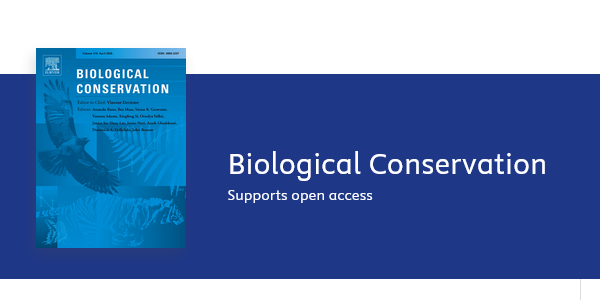
Ayeko Ranmi
Ayeko Ranmi Denise

Research topic
My PhD research focuses on the implications of habitat fragmentation on hunting sustainability in Southern Benin. Located within the Dahomey Gap, this region serves as an ecological transition zone where a few remaining forest patches play an essential role in conserving biodiversity and species hunted for bushmeat. My work combines diachronic analysis of satellite imagery, landscape fragmentation assessment, habitat extinction risk modeling, and surveys within local communities to better understand landscape dynamics, game availability, and human-nature interactions. Ultimately, this research aims to provide decision-support tools and spatial management strategies tailored to the socio-ecological context of Southern Benin, contributing to the sustainable conservation of forest ecosystems and wildlife.
PhD Supervision
Sêwanoudé Scholastique Mireille TOYI (LEA, UAC)
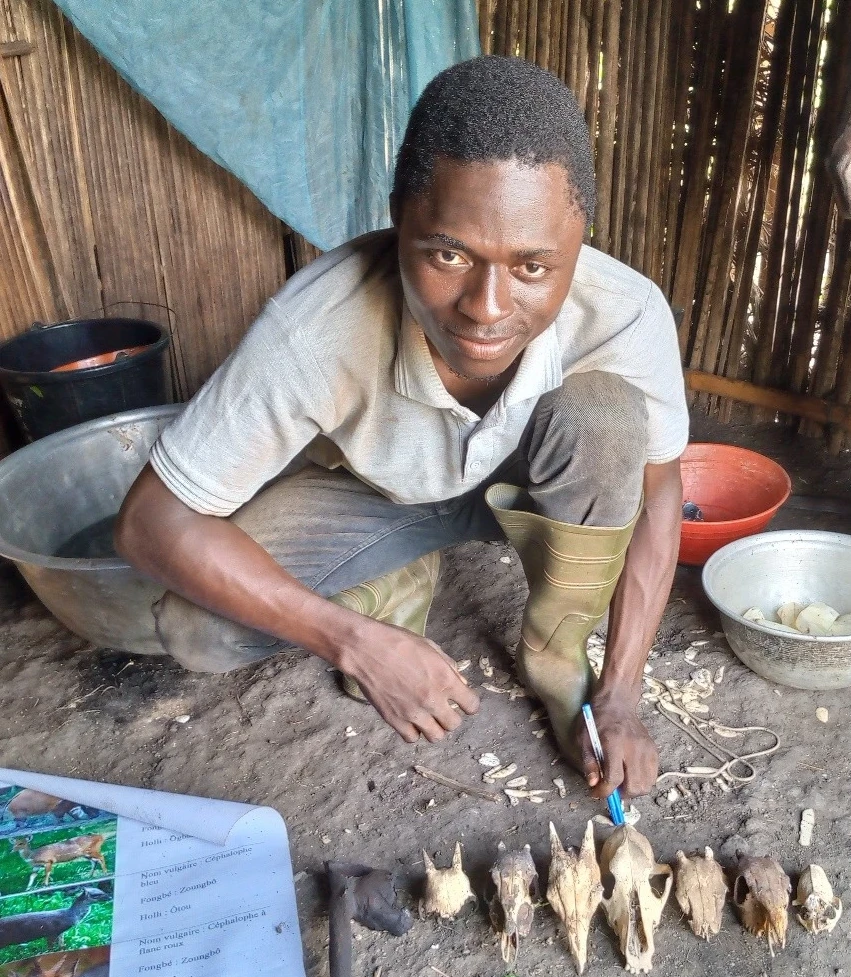
Akpoli Ephrem
Akpoli Ephrem
Research topic
Conservation of Forest Ungulate Habitats in the Dahomey Gap (Benin): Resources, Governance, and Sustainability
My thesis focuses on the conservation of forest ungulate habitats in the Dahomey Gap (Benin). Drawing on source-sink theory, it assesses the spatial structure of the metapopulation of forest ungulate species in the Lama Forest Reserve, followed by an analysis of the spatio-temporal dynamics of these ungulates across forest remnants over the past three decades (1993–2003, 2003–2013, 2013–2023). This is complemented by a characterization of these habitats in terms of their ecological and functional attributes. The thesis explores human interactions with these habitats, highlighting both ecosystem services and disservices, and examines governance mechanisms by contrasting the "tragedy of the commons" with "commons governance". Finally, it proposes an integrated framework to reconcile habitat conservation with human well-being.
PhD Supervision
Fortuné Akomian Azihou (LEA)Djagoun Joël
Djagoun Joël
Université Nationale d'Agriculture
Bénin
Research topic
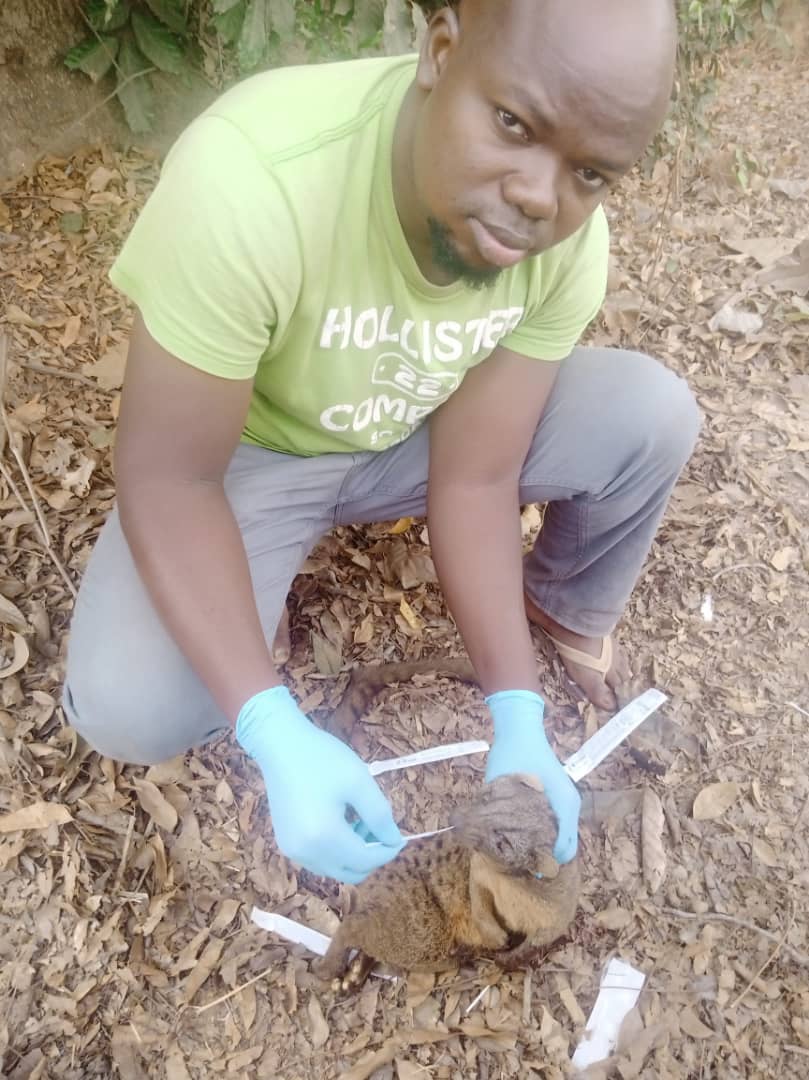
Sustainability of the bushmeat trade around the Lama Classified Forest: One Health challenges and perspectives
My PhD research focuses on evaluating the sustainability of the bushmeat trade around the Lama Classified Forest in Southern Benin. It adopts an integrated One Health approach that considers the interactions between human, animal, and ecosystem health. The general objective is to better understand the ecological, health, and socio-economic dynamics underlying the wildlife trade in order to propose sustainable management strategies that reconcile biodiversity conservation, health security, and local livelihoods. Ultimately, this research will contribute to a deeper understanding of the interactions between wildlife exploitation, biodiversity conservation, public health, and local development. The findings will provide a solid foundation for developing sustainable management policies and strategies for the bushmeat trade within the Beninese context.
PhD Supervision
Bruno Djossa (Unité de Recherche en Foresterie et Conservation des Bioressources, Université Nationale d'Agriculture (UNA), Porto-Novo, Bénin)
Philippe Gaubert (CRBE, Université de Toulouse, France)
Publications
Mehouenou Juste
Mehouenou Juste
Université de Parakou
Bénin
Centre de Recherche sur la Biodiversité et l'Environnement (CRBE)
Université de Toulouse, France
Research topic
Rethinking sustainable bushmeat harvesting: Ethnographic, socio-economic, and transdisciplinary approaches around the Lama Classified Forest (Benin)
My PhD research explores the socio-economic and cultural dimensions of hunting and the wildlife trade in Southern Benin, with a particular focus on the factors driving bushmeat demand and the role of women in these activities. By interviewing hunters, traders, and consumers in and around the Lama Classified Forest, this work aims to identify the factors that influence hunting sustainability and to propose management solutions that benefit both local communities and biodiversity conservation.
PhD supervision
Fifanou Vodouhé (LARDES, Université de Parakou)
Philippe Gaubert (CRBE, Toulouse)
Romain Duda (CEFE, Montpellier)
Research allocation for a PhD thesis in the South - ARTS (IRD)
French government scholarship for study in France - SCAC Ambassade de France au Bénin
Pires Daniel
Pires Daniel

Université de Toulouse, France
Centro Interdisciplinar de Investigação Marinha e Ambiental (CIIMAR)
Université de Porto, Portugal
Research topic
From forest to fork: Mapping zoonotic risks in tropical bushmeat systems through a One Health lens
Ma thèse explore les risques émergents de maladies zoonotiques liés au commerce de la viande de brousse en Afrique de l’Ouest, avec un focus sur la forêt classée de Lama au Bénin. En adoptant une approche One Health, elle étudie la circulation de pathogènes prioritaires comme les Betacoronavirus et Bacillus anthracis (agent responsable de l'anthrax), ainsi que la diversité bactérienne potentiellement responsable de nouvelles maladies ("Disease X"). En combinant analyses moléculaires, enquêtes épidémiologiques et sciences sociales, ce projet vise à mieux comprendre les interactions entre faune sauvage, animaux domestiques et populations humaines, afin de prévenir les risques sanitaires liés à l’exploitation de la faune sauvage dans un contexte socio-écologique complexe.
PhD supervision
Philippe Gaubert & Emilie Lecompte (CRBE, Toulouse, France)
Agostinho ANTUNES (CIIMAR, Université de Porto, Portugal)
Doctoral fellowship EUR UNITEID