Our work 2 test
Study Sites
SHUNT studies a socio-ecosystem that connects the Lama Classified Forest to the Tègon bushmeat market and the Abomey wildlife carcass market. This system closely links ecological components - such as a rich yet fragile biodiversity, fragmented forest habitats, and threatened mammal populations - with strong social components, particularly rural communities that rely on hunting for their food security and income, as well as wildlife trade networks.
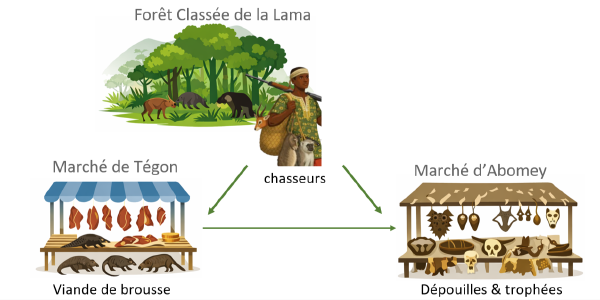
The interactions between these components lie at the heart of sustainability challenges:
- Hunting exerts significant pressure on species and habitats, threatening biodiversity conservation.
- The trade and consumption of bushmeat raise crucial public health concerns related to zoonotic risks.
Lama Forest
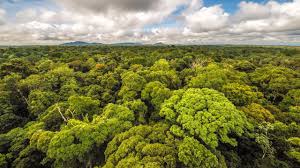
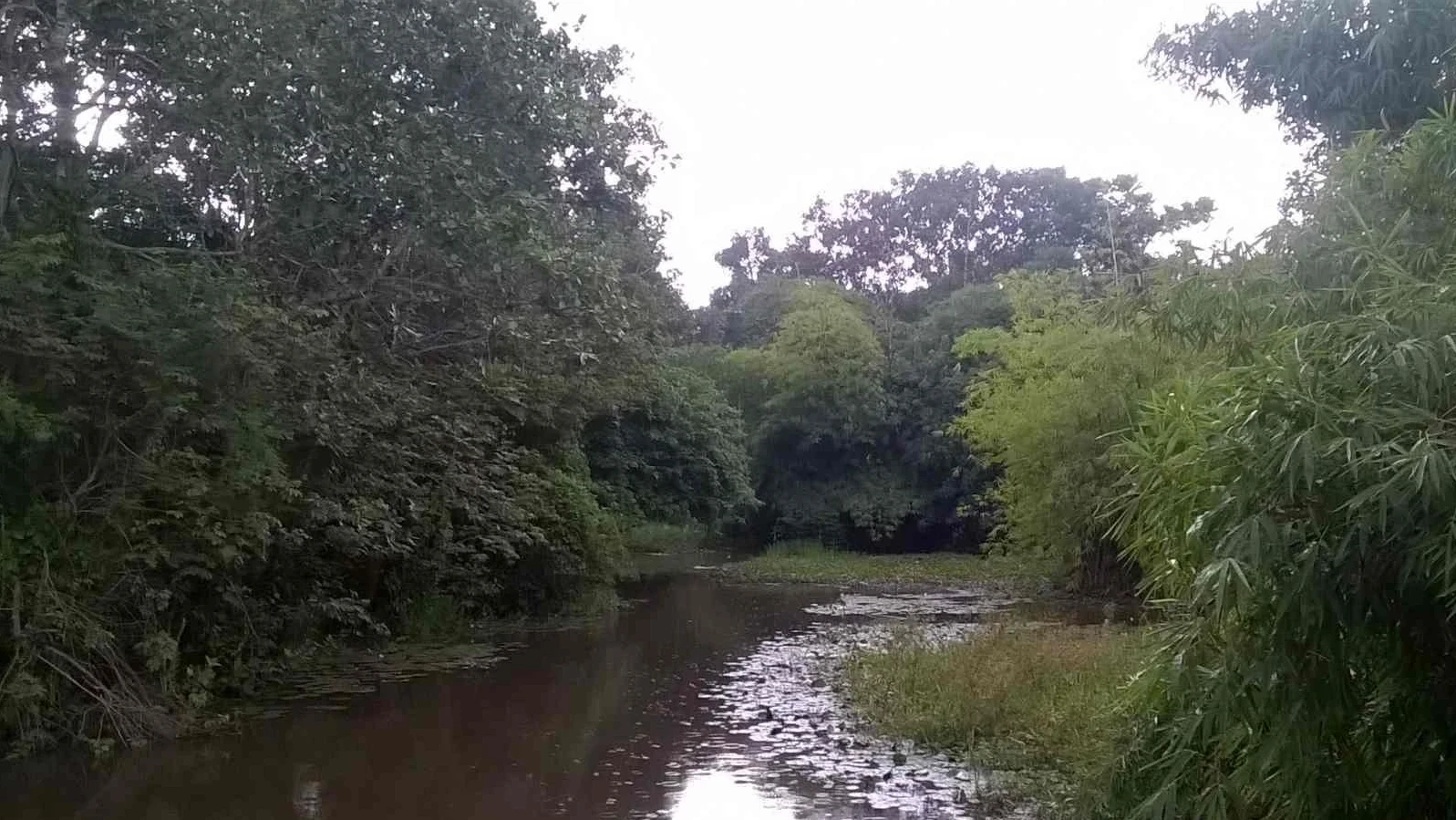
The Lama Classified Forest is the last remaining large protected forest area (approx. 16,000 ha) in Southern Benin. This protected zone is under intense anthropogenic pressure, driven by both deforestation and hunting activities.
The Lama Classified Forest consists of a central core area (4,777 ha) of semi-deciduous dense forest that remains relatively untouched by human activities, surrounded by a buffer zone primarily made up of teak plantations and fallow land.
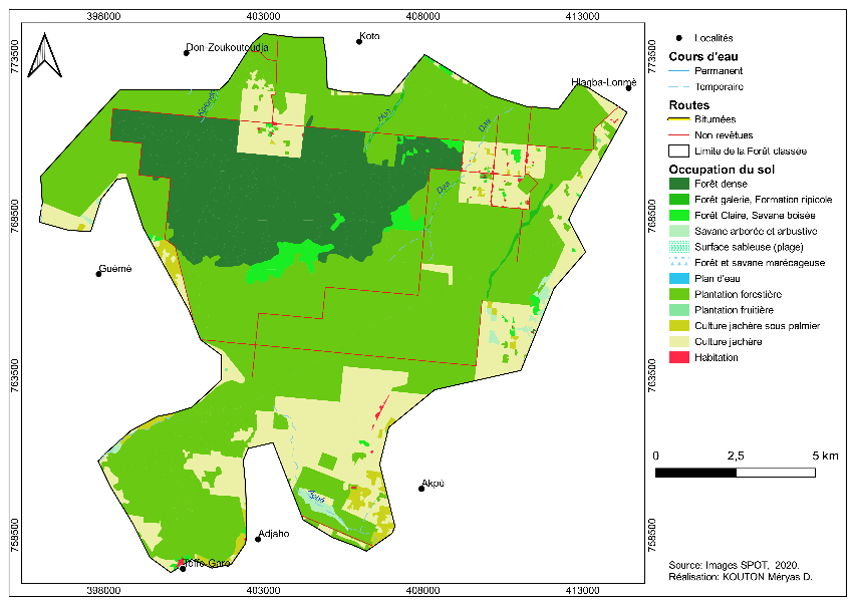
The Lama forest shelters a diverse wildlife population, including 35 game species (primarily mammals), 19 of which are threatened or near-threatened according to the Benin Red List.
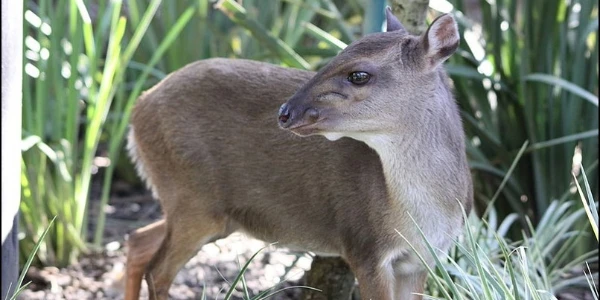

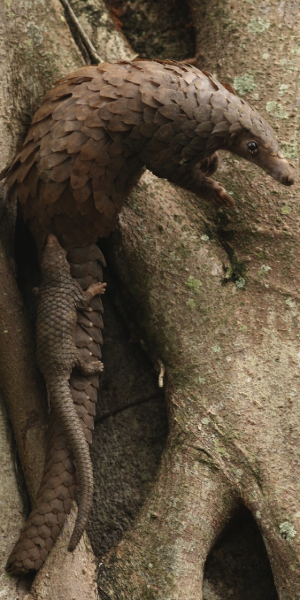
Marchés de faune sauvage
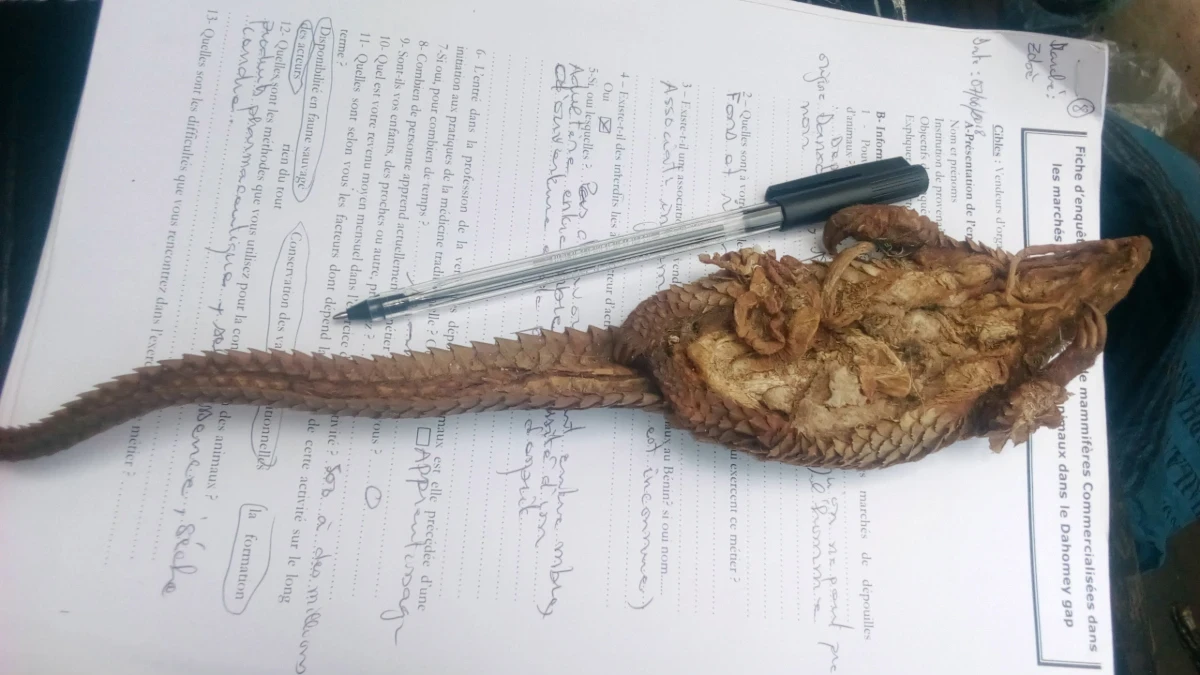
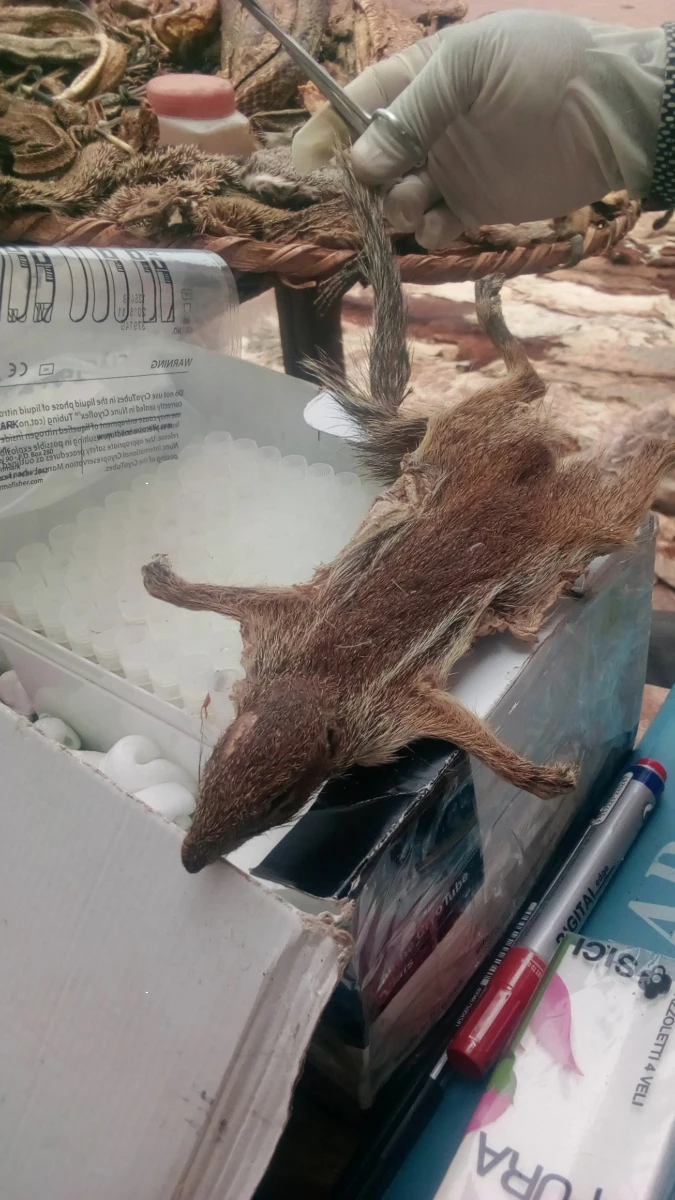
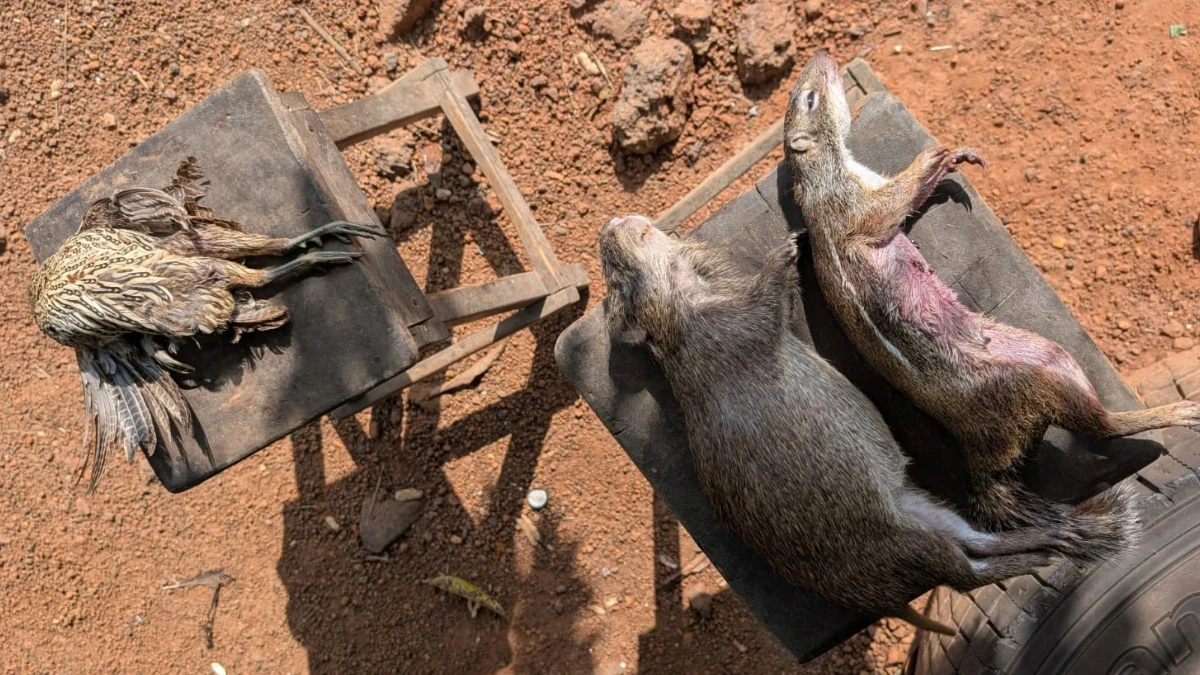
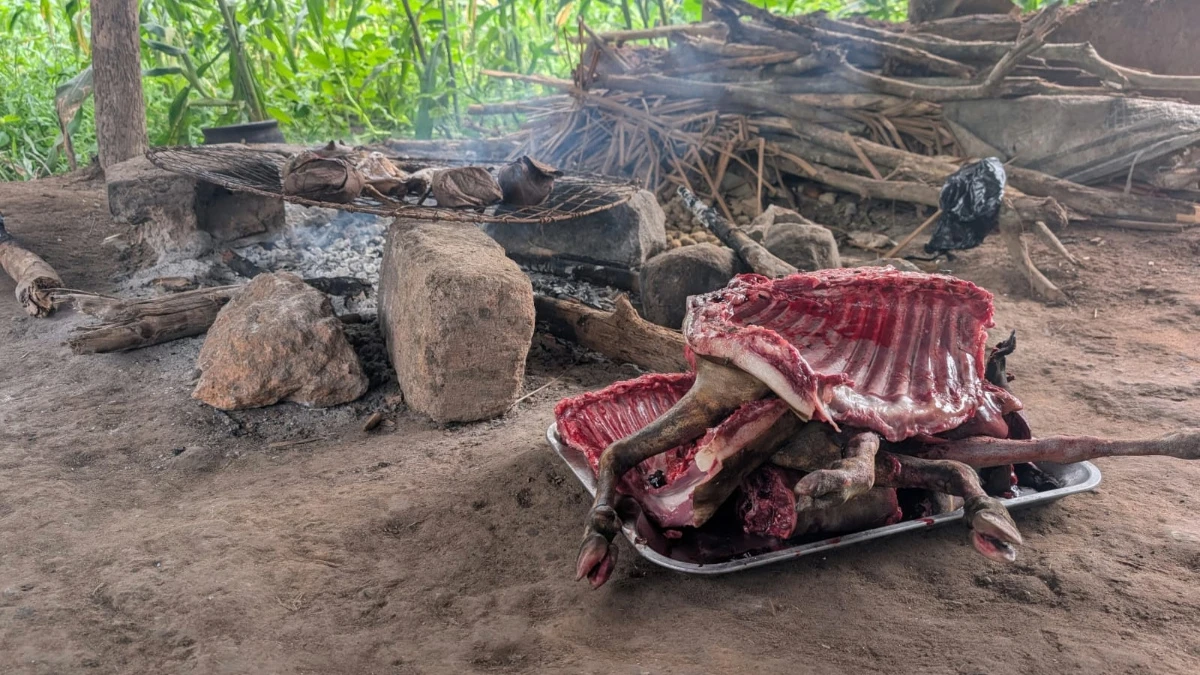
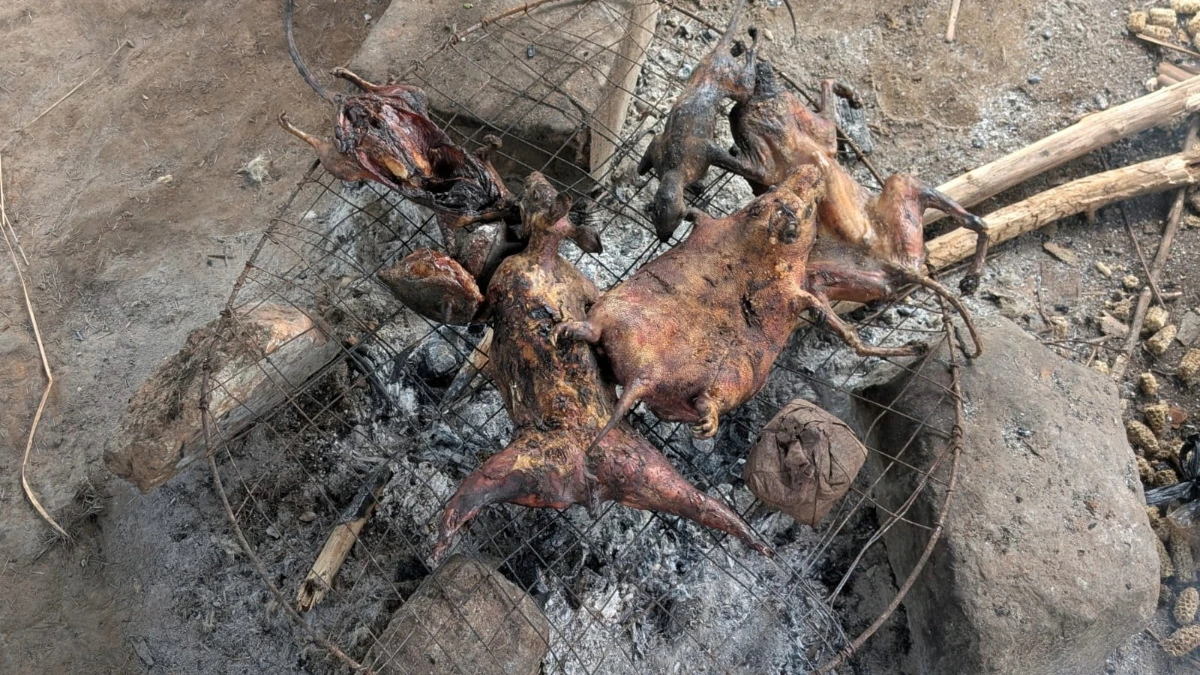
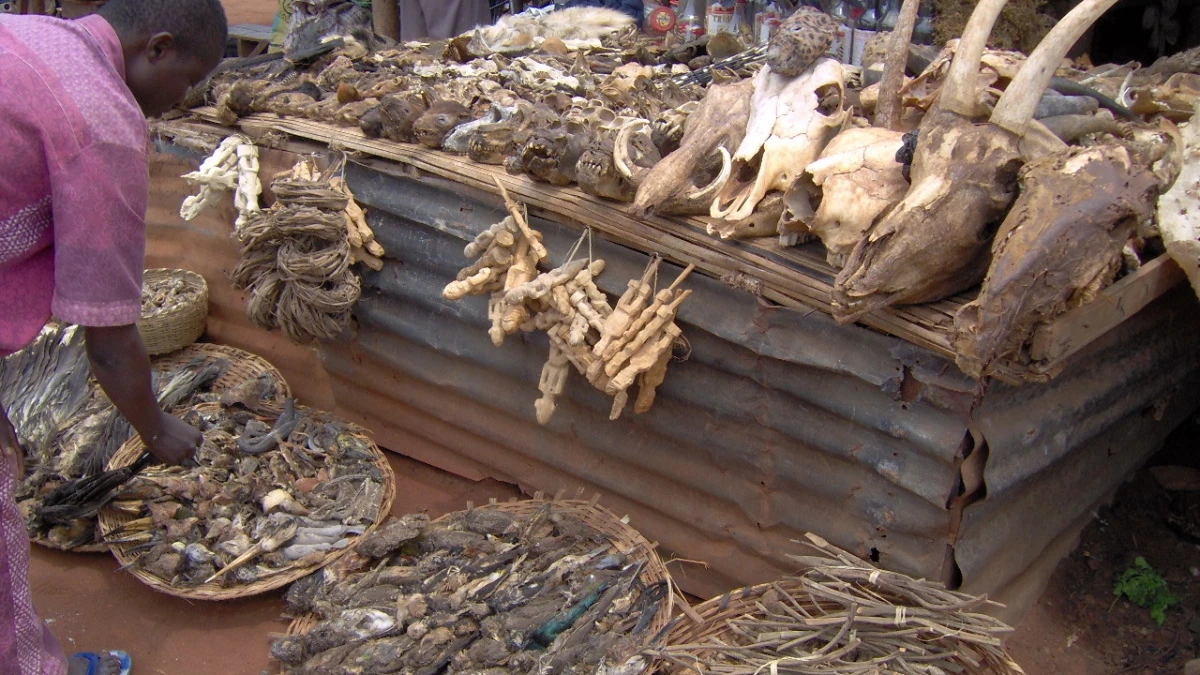
The Tègon and Abomey markets are the primary supply and trade sites under study. While the supply area for bushmeat is relatively restricted to the surroundings of the Lama Classified Forest, the supply area for wildlife carcasses is more extensive. The origins of the products, trade volumes, and marketed species, along with stakeholder practices (professional vs. occasional hunters, hunting techniques), are characterized through field surveys and molecular species tracking.
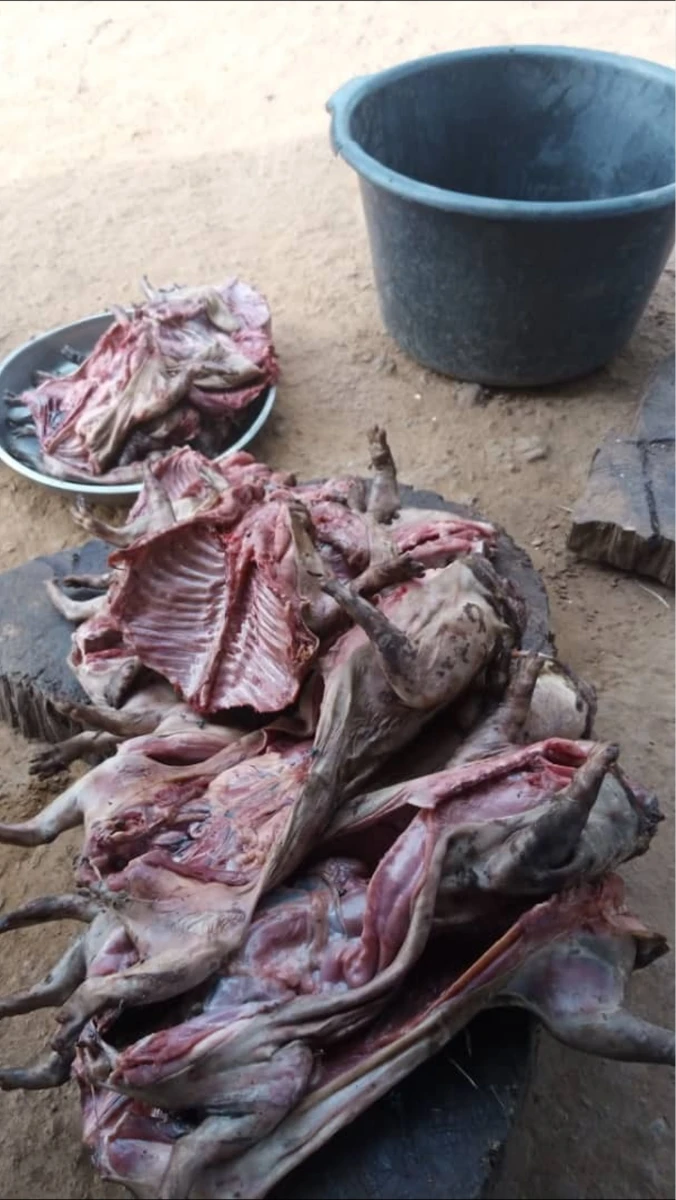
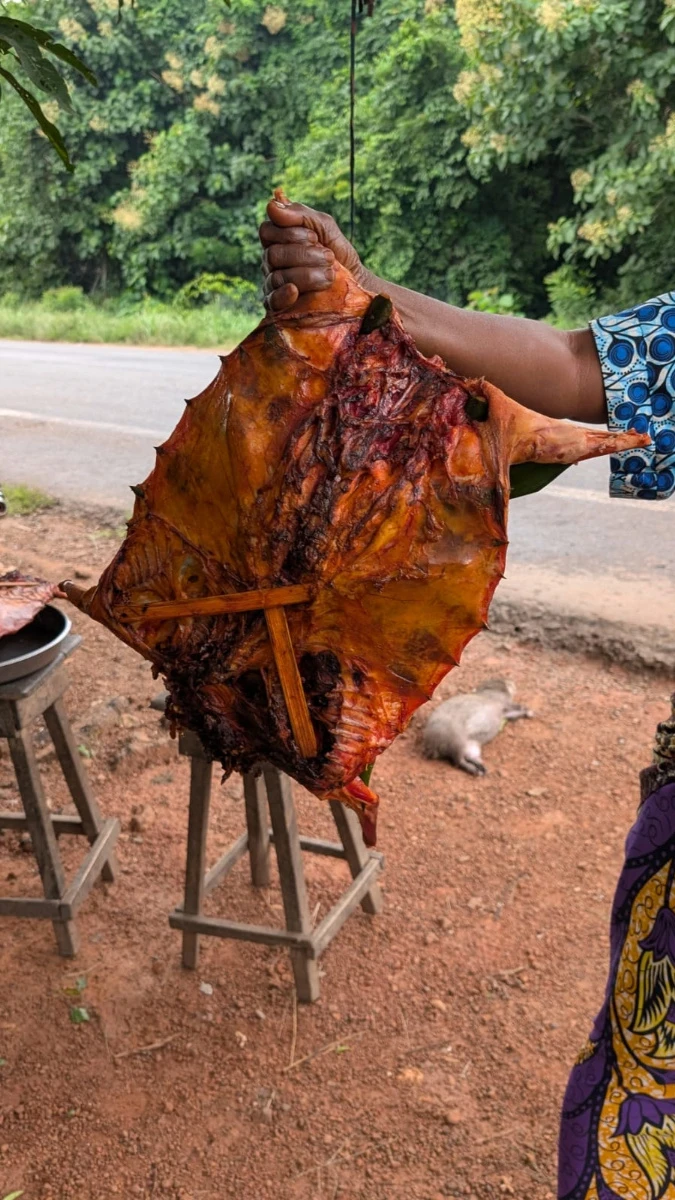
Lama Classified Forest
The Lama Classified Forest is the last remaining large protected forest area (approx. 16,000 ha) in Southern Benin. This protected zone is under intense anthropogenic pressure, driven by both deforestation and hunting activities.
The Lama Classified Forest consists of a central core area (4,777 ha) of semi-deciduous dense forest that remains relatively untouched by human activities, surrounded by a buffer zone primarily made up of teak plantations and fallow land.
The Lama forest shelters a diverse wildlife population, including 35 game species (primarily mammals), 19 of which are threatened or near-threatened according to the Benin Red List.
The wildlife markets
The Tègon and Abomey markets are the primary supply and trade sites under study. While the supply area for bushmeat is relatively restricted to the surroundings of the Lama Classified Forest, the supply area for wildlife carcasses is more extensive. The origins of the products, trade volumes, and marketed species, along with stakeholder practices (professional vs. occasional hunters, hunting techniques), are characterized through field surveys and molecular species tracking.
Activities & Methodology
The activities of the SHUNT IJL cover several complementary areas:
-
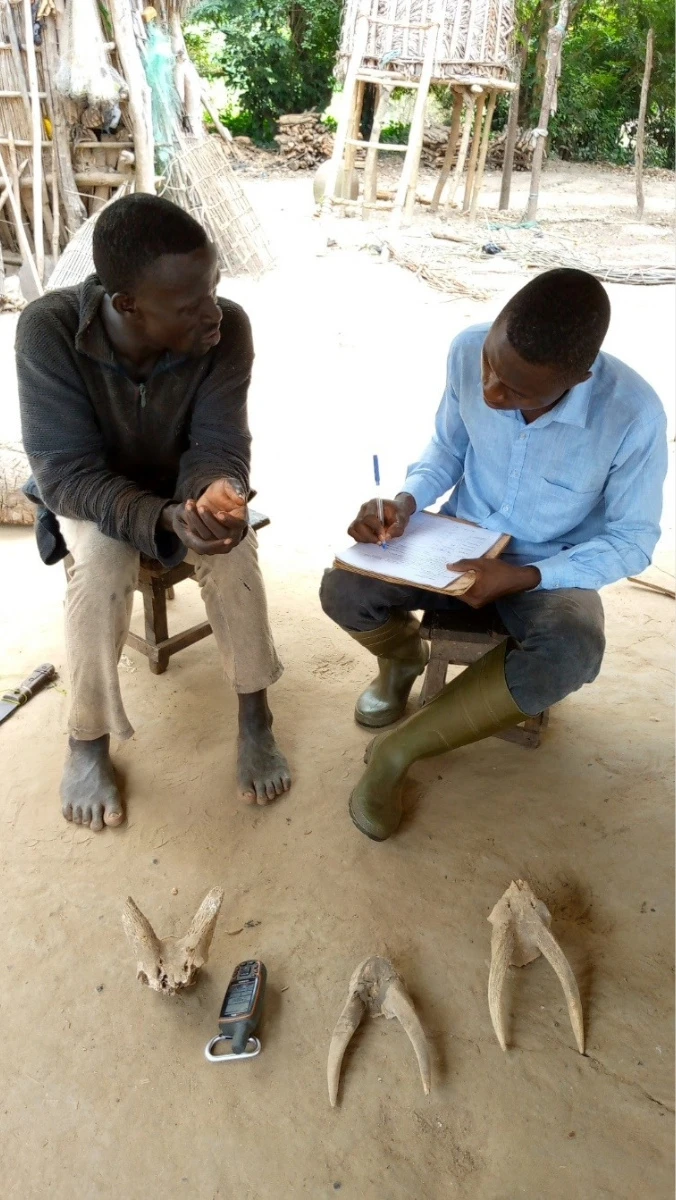
Socio-economic Surveys: Collecting perceptions, practices, and economic challenges from hunters, traders, and consumers.
-
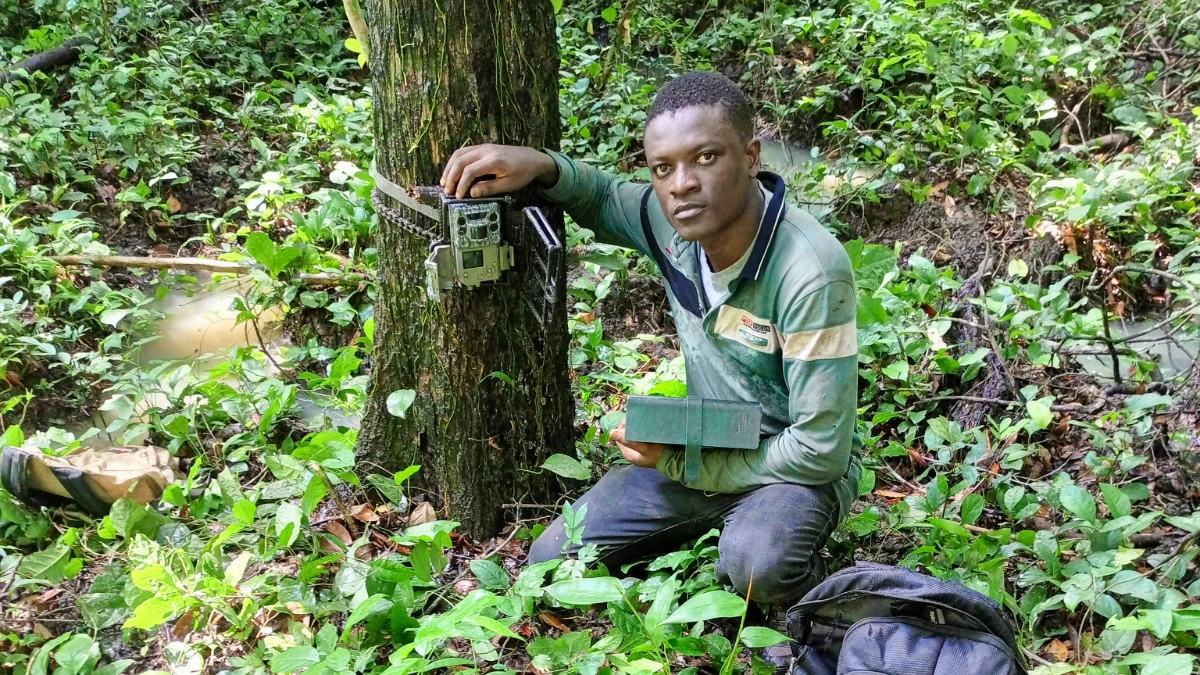
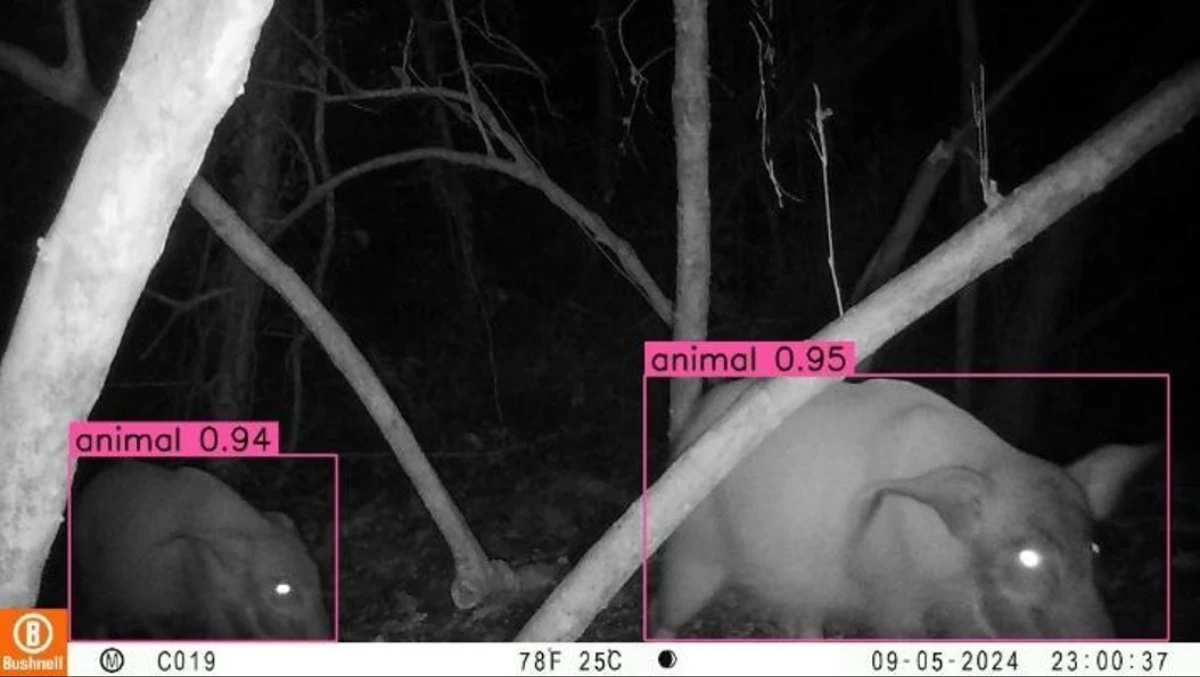
Population Monitoring: Conducting ecological surveys to assess biodiversity (diversity, density) and hunting pressure.
-
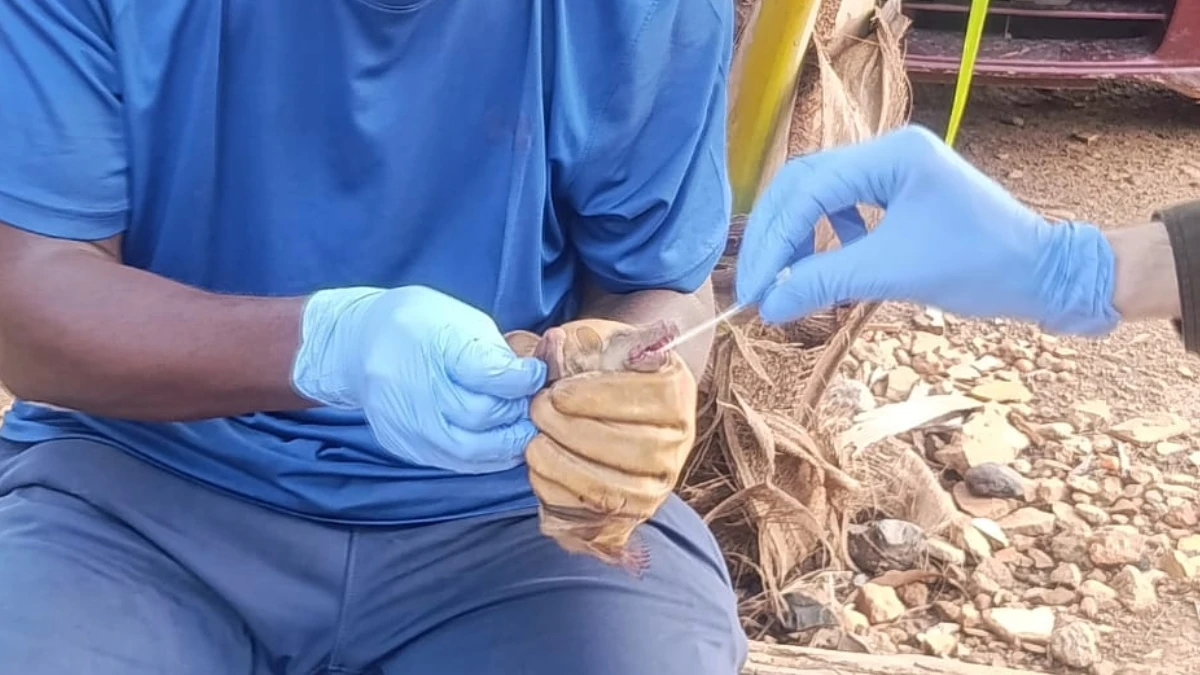
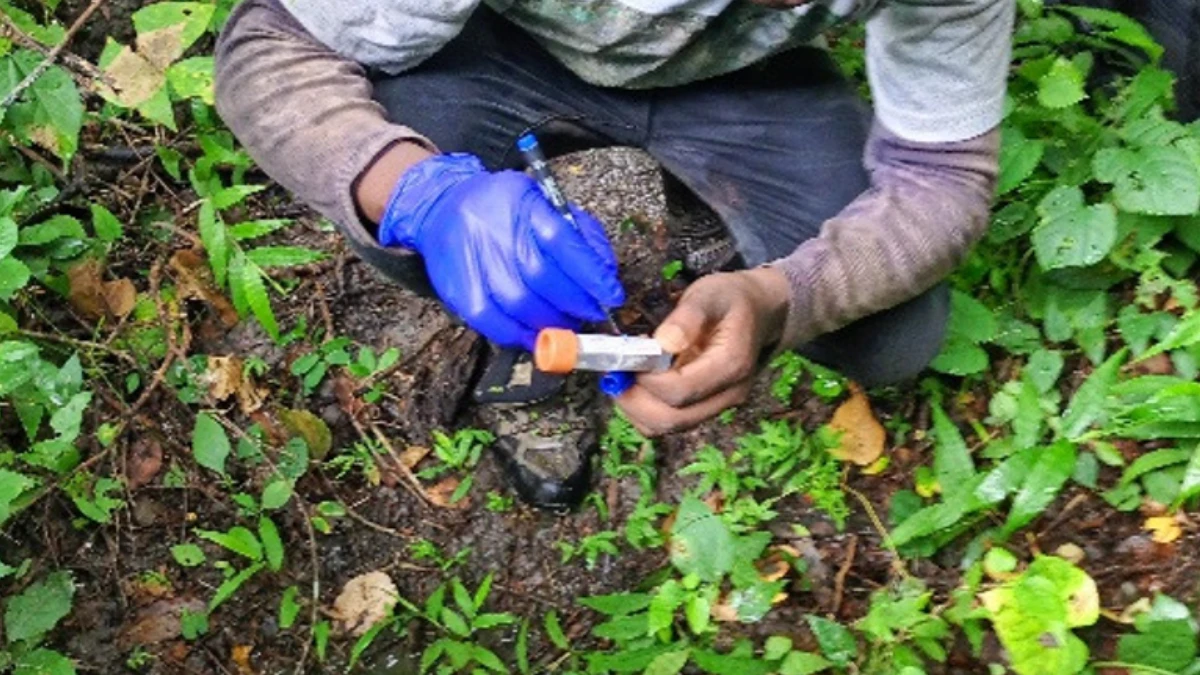
Health Surveillance: Carrying out microbiological and virological monitoring in bushmeat markets to identify health risks.
-
Biodemographic Modeling: Developing models to estimate harvest sustainability and predict future impacts
-
Training & Capacity Building: Strengthening local capacities through Master’s programs, PhDs, and specialized training.